The Lobito Trans-Africa Corridor and the Partnership for Global Infrastructure and Investment

The Lobito Trans-Africa Corridor and the Partnership for Global Infrastructure and Investment
A Strategic Turning Point for the Democratic Republic of the Congo and Global Trade Management Consulting & Staffing (GTMCS)
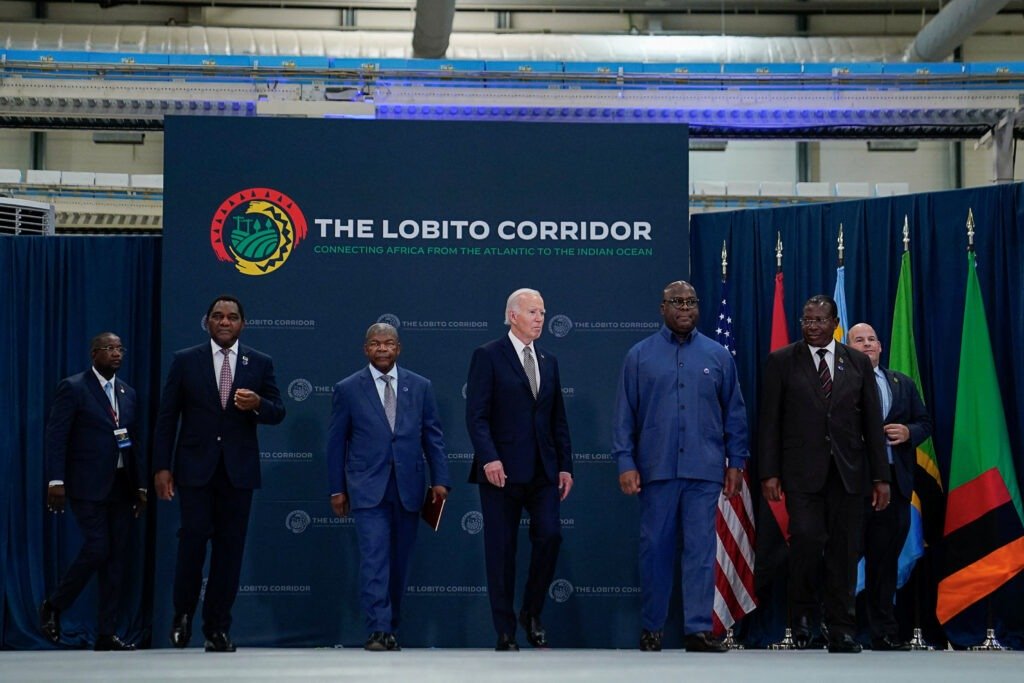
The Lobito Trans-Africa Corridor has emerged as one of the most strategically significant
infrastructure initiatives on the African continent. Anchored in the broader framework of the
Partnership for Global Infrastructure and Investment (PGII)—launched by the G7 in 2022 to
mobilize hundreds of billions of dollars toward sustainable infrastructure—the Lobito Corridor
represents a geopolitical, economic, and industrial inflection point for Central and Southern
Africa.
For the Democratic Republic of the Congo (DRC), this corridor is not merely a transportation
project. It is a structural enabler of industrial transformation, mineral value addition, supply chain
security, and regional economic integration. For Global Trade Management Consulting &
Staffing (GTMCS), it creates a once-in-a-generation opportunity to operationalize its integrated
model of consulting, workforce development, diaspora mobilization, and full-spectrum HR
services
How the Lobito Corridor Came About
The Lobito Corridor is rooted in three converging developments:
1. Global Critical Mineral Demand
The global transition toward electric vehicles, renewable energy, advanced defense
systems, and digital technologies dramatically increased demand for cobalt, copper,
lithium, and other strategic minerals—many of which are abundant in the DRC.
2. U.S.–DRC Strategic Partnership
The signing of the Strategic Partnership Agreement between the Government of the
United States of America and the Government of the Democratic Republic of the Congo
formalized a long-term framework for cooperation in critical minerals, infrastructure,
energy, and industrialization. The agreement explicitly recognizes the Sakania–Lobito
Corridor as a strategic infrastructure project critical to secure and reliable mineral
exports.
3. Regional Economic Integration Efforts
The Regional Economic Integration Framework (REIF) between the DRC and
Rwanda aims to formalize mineral supply chains, improve cross-border infrastructure,
enhance transparency, and strengthen economic cooperation in the Great Lakes region.
The Lobito Corridor aligns with this framework by connecting mineral-rich zones of
southeastern DRC (Tenke, Kolwezi, Lubumbashi) to the Atlantic port of Lobito in Angola.
The PGII elevated this corridor to global strategic status by positioning it as a transparent,
high-standard alternative infrastructure model focused on sustainability, private-sector
mobilization, and responsible mineral sourcing.
What the Lobito Corridor Represents Structurally
The corridor connects:
● Mining hubs in Kolwezi, Lubumbashi, and Tenke
● The SNCC rail network in the DRC
● The Benguela railway in Angola
● The Port of Lobito on the Atlantic Ocean
Under Article IX of the U.S.–DRC Strategic Partnership Agreement, the corridor is recognized
as:
● A key export route for copper, cobalt, zinc, and other critical minerals
● A vehicle for increased U.S. private sector investment
● A logistics backbone for industrialization and trade expansion
This initiative is not limited to mineral exports. It is intended to:
● Stimulate special economic zones
● Enhance energy and transport integration
● Increase competitiveness of DRC exports
● Reduce logistical costs
● Improve compliance, traceability, and ESG standards
How the DRC Benefits from the Lobito Corridor
1. Global Critical Mineral Demand
The corridor reduces dependence on congested southern routes and shortens transit time to
international markets. Lower transport costs directly increase the profitability of mining
operations and encourage in-country processing.
2. Increased Foreign Direct Investment
By providing infrastructure predictability, the corridor de-risks investments in:
● Mining
● Mineral processing
● Logistics
● Energy
● Industrial manufacturing
The Strategic Partnership Agreement emphasizes attracting U.S. investment into exploration,
beneficiation, and processing projects
3. Value Addition and Job Creation
The corridor is explicitly tied to:
● Local beneficiation capacity
● Expansion of processing plants
● Development of industrial parks
● Formalization of artisanal mining
● Workforce professionalization
Under the REIF mineral supply chain framework, emphasis is placed on transparency,
traceability, and professionalization of mining activities
4. Strengthened Governance and Transparency
The framework supports:
● OECD-aligned due diligence
● Anti-corruption reforms
● Digital traceability
● Regulatory modernization
This improves investor confidence and global market credibility.
Strategic Implications for GTMCS
The Lobito Corridor creates a structural demand for exactly the services GTMCS is designed to
provide.
According to the GTMCS Expansion Project document, the firm’s mission is to provide strategic
consulting, staffing, and comprehensive HR management solutions tailored to major
infrastructure projects such as the Lobito Corridor.
1. Strategic and Sectoral Consulting
The corridor requires:
● Market intelligence
● Regulatory compliance advisory
● ESG alignment
● Workforce forecasting
● Investor facilitation
● Public–private partnership structuring
GTMCS provides:
● Sector-specific research (mining, logistics, infrastructure, energy)
● Legal and regulatory compliance advisory
● Investor support services
● Government liaison and facilitation
As multinational firms enter the corridor ecosystem, GTMCS becomes a technical bridge
between foreign investors, Congolese institutions, and local labor markets.
2. Staffing & Recruitment
The corridor will require:
● Mining engineers
● Logistics managers
● Rail and port specialists
● Environmental compliance officers
● Financial controllers
● IT and digital traceability experts
● Security and risk management professionals
GTMCS offers:
● Local and international recruitment
● Access to a global database of Congolese diaspora professionals
● Rapid placement of specialized consultants
The diaspora dimension is particularly strategic. The Lobito Corridor’s compliance and ESG
standards require internationally trained professionals—precisely the talent pool GTMCS is
structured to mobilize.
3. Continuous Training & Talent Development
Infrastructure projects at this scale demand standardized workforce training.
GTMCS provides:
● Certification programs aligned with U.S. and international standards
● Bilingual (French–English) e-learning platforms
● Professional development pathways
Expansion Project of Global Tra…
This is critical because:
● The Strategic Partnership Agreement emphasizes formalization and industrialization of
mining.
● The REIF emphasizes professionalization of mineral supply chains.
● ESG compliance demands safety training and traceability knowledge.
GTMCS can establish corridor-specific workforce academies in Kinshasa, Lubumbashi, and
Kolwezi to supply pre-certified labor pools to investors.
4. Full-Service HR Solutions
Major corridor projects require:
● Compliant contracts
● Payroll management
● Benefits administration
● Labor law compliance
● Immigration coordination
● Conflict resolution mechanisms
GTMCS provides:
● Recruitment and onboarding
● Payroll and benefits management
● Legal representation and compliance oversight
Expansion Project of Global Tra…
For foreign firms unfamiliar with DRC labor regulations, GTMCS reduces operational risk by
serving as a compliant HR intermediary.
V. GTMCS as a Workforce Infrastructure Partner
The Lobito Corridor is physical infrastructure.
GTMCS represents human capital infrastructure.
The PGII model emphasizes sustainability, transparency, and local impact. Workforce readiness
is a precondition for:
● Investor success
● Regulatory compliance
● Reduced operational delays
● Social stability
● Community benefit
GTMCS aligns with:
● U.S.–DRC industrial objectives
Strategic Partnership Agreement…
● Regional integration priorities
REGIONAL ECONOMIC INTEGRATION F…
● National workforce modernization goals
Expansion Project of Global Tra…
By integrating consulting, staffing, training, and HR compliance, GTMCS occupies a unique,
high-value position in the corridor ecosystem.
VI. Conclusion
The Lobito Trans-Africa Corridor, under the Partnership for Global Infrastructure and
Investment, represents more than a rail line—it is a strategic realignment of global mineral
supply chains and African industrial development.
For the DRC, it offers:
● Industrial transformation
● Job creation
● Infrastructure modernization
● Increased global credibility
● Greater value retention from mineral resources
For GTMCS, it provides:
● A high-growth market for strategic advisory services
● Large-scale staffing demand
● Diaspora talent mobilization opportunities
● Workforce training ecosystems
● Full-service HR outsourcing partnerships
In this new geopolitical and economic architecture, infrastructure without skilled human capital
cannot succeed. GTMCS positions itself as the strategic workforce engine powering the Lobito
Corridor and the next chapter of Congolese industrial advancement.